

Despite the fact that only a small number of of the numerous or so kinds of piranha are considered to be unsafe to humans, the red-bellied piranha is one of those. It just so happens to reside in the waterways of South America. Cinema flicks and fables have villianized this sharp-toothed beast -- and to some quantity, with reason. The myths range from schools of piranhas utterly devouring the first of a herd of large animals to cross a river to indiscriminate assaults on people.
Piranhas inhabit many of the freshwater streams of South America, swimming in large schools that are attracted by blood and disturbances in the water. Its reported that they only a hazard to human beings if the water levels are low from their river drying. Or perhaps when humans are swimming near places near the shoreline where fish are being skinned and their guts tossed into the water.
For the most part, though, you’ll be safe from a hit-or-miss attack by a school of ravenous piranhas. Take good care, though, in getting into the waters. The piranha truly is one of the most dangerous south american animals.

Anaconda
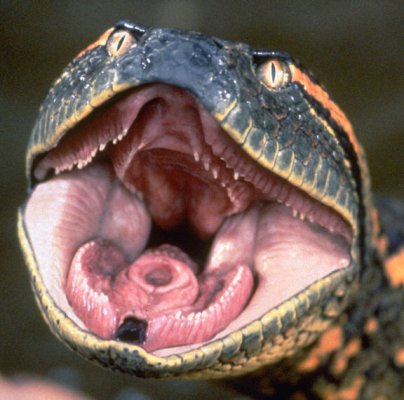
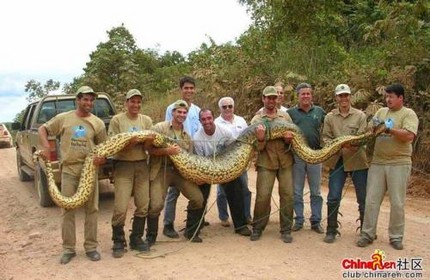
This South American monster of a beast is straight out of the films - or your nightmares. Despite the fact that they generally don’t grow incredibly large, anacondas have been known to break the scales at over 230 kilograms. It is often considered to be the biggest snake on the planet. You certainly don’t want to get trapped unawares with this serpant due to their procedure of attacking and detaining their its next meal.

It is positively a unusual type of snake type as it usually coils around its kill, slowly-but-surely increasing the strain up to the point its victims suffocates. It jaws are powered by muscles that generate sufficient enough strain for its in excess of 100 razor-sharp re-curved fangs to go through the thick skin of an alligator. They do not have poison sacks, only taking advantage of their forceful jaws to capture and keep their prey.
Anacondas commonly prey on any type of animal that it can prevail over, but more often than not they are no threat to humans. Most of the time they would rather to camouflage and rapidly withdraw when people are near.

Poisonous Frogs
The Golden Poison Frog of Central and South America is richly covered by using a strong alkaloid poison. But this is not only any poison! This little frog, not exceeding 55mm in size, packs enough thump to take down a pair of African Bull Elephants … don’t touch it. Actuality, its poison lining is a lot more life-threatening versus the great sting of a box jellyfish.

This apparently safe frog continues to be known to be a killer of persons who have touched it directly. Its also been confirmed that domestic birds and pet dogs have perished by contacting a paper towel on which a Golden Poison Frog had walked! Bizarre.
As well as the Golden Poison Frog is among the most-harmful South American Animals, it also has other poison frog neighbours. They are also enclosed in the same poison layer, but are not quite as harmful. All in intense hues, they would undoubtedly look relatively easy to capture and touch, but really, stay at a distance.


Its been said that in fact majority of these frogs may appear to possess a sense of their own invincibility. Whereas other jungle animals tend to hide from predators, quite a few unsafe frogs will plainly walk right out on the woodland ground. Its very nearly as if they are daring someone to touch them.


